By Wear & Repeat · 23 October 2026
A capsule wardrobe becomes useful when its pieces make getting dressed easier. It does not need to replace everything you own or follow a prescribed color palette. Start with a small group you can actually wear together, then notice which combinations suit your week.
This neutral starting point has six pieces: an ivory shirt, a black tee, an oatmeal cardigan, tailored black trousers, straight blue jeans and white sneakers. One pair of shoes counts as one wardrobe item. It is a small outfit group, rather than a complete wardrobe: underwear, sleepwear, weather protection and clothes for specialist activities sit outside it.
The point is to identify similar pieces in your own wardrobe first. If ivory is awkward to maintain, or black feels too severe, keep the role and change the color. A navy tee and cream trousers can work just as well if they coordinate with what you already wear.
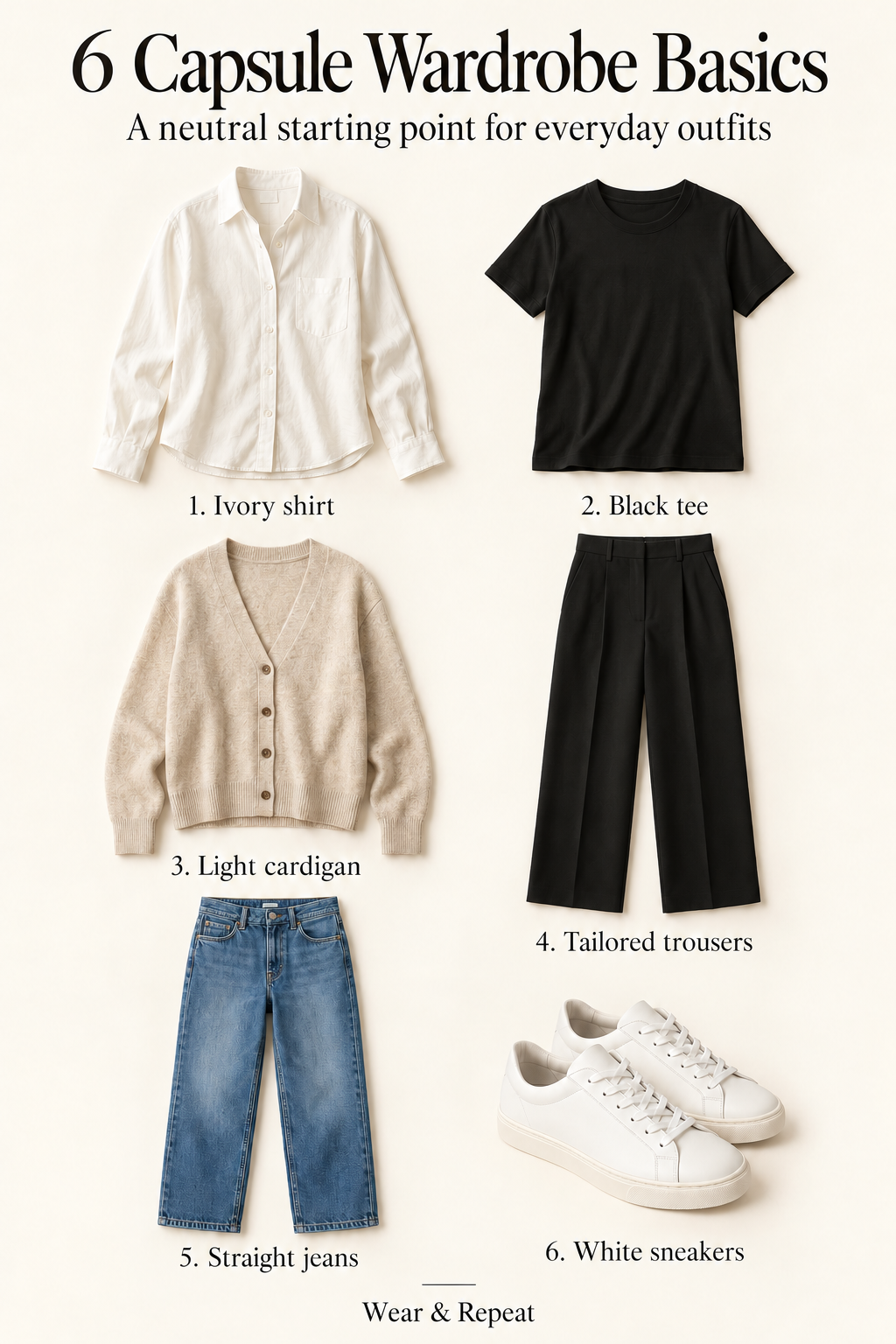
1. An ivory shirt that works open and buttoned
Choose a shirt with enough room to move comfortably through the shoulders and upper arms. Check it while sitting, reaching forward and lifting your arms. Buttons that pull apart during those movements are a reason to try another cut rather than plan around a garment you cannot relax in.
Wear it buttoned with jeans for a straightforward outfit, or open over the tee when you want an extra layer. A partial tuck changes the outline without adding another item. Before buying, check how transparent the actual fabric is under the light where you will wear it; a planning illustration cannot establish opacity, softness or fit.
2. A black tee you like wearing on its own
The tee is the quiet anchor. Its neckline and sleeve length should suit your preferences, since it will be visible in several combinations. Test whether the hem stays where you want it when you sit down and whether a tuck feels comfortable inside both bottoms.
A close fit can sit neatly under the shirt or cardigan. A roomier fit can also work, but try the actual layers together so excess fabric does not bunch. There is no need to buy both versions before you know which one you reach for. Read the specific garment's composition and care label instead of assuming every basic tee behaves alike.
3. An oatmeal cardigan for a change of texture
The cardigan adds a different texture to the shirt and denim. Leave it open over the tee, or wear it over the buttoned shirt. Its weight should match your climate and routine: a thick knit that looks inviting in a picture may stay unworn if your days are warm.
Check the cuffs, neckline and underarm space with your intended base layer underneath. If you dislike bulky sleeves, try a straighter sleeve or a lighter knit. The useful purchase is the layer you will carry and wear, rather than the one that only completes a color scheme.
4. Tailored black trousers with a comfortable waistband
These offer an alternative to denim when you want a different outline. Straight or gently wide legs can both work with the same tops. Choose according to your comfort and the shoes you intend to repeat, rather than treating one silhouette as essential.
Try the trousers sitting down as well as standing. Check pocket placement, waistband pressure and whether the hem drags in your sneakers. An alteration can make sense if the rest fits, but include its cost before comparing two options. Tailored trousers and sneakers may suit a relaxed workplace; follow your own dress code rather than assuming this is a formal work capsule.
5. Straight blue jeans in your preferred rise
Jeans give the group a casual base. The rise should feel comfortable when you bend and sit, and the leg opening should work with your sneakers. If you already own another denim cut that fits well, use it before buying a straight pair simply to match the list.
Try the jeans with each top. A shirt that looks balanced untucked with trousers may need a different tuck with jeans. These small adjustments help you evaluate the pieces you own without turning every styling problem into another purchase. Follow the actual care instructions; no illustration establishes stretch recovery, colorfastness or durability.
6. White sneakers you can walk in
One pair of sneakers ties the outfit group together. White is a visual choice, not a requirement: cream, gray or another existing neutral pair may be easier for your routine. Comfort, fit and suitability for the places you walk matter more than matching an image exactly.
Check the fit with the socks you plan to use, including space at the toes and how securely the heel sits. Review the retailer's return conditions before wearing a new pair outdoors. A neat appearance does not prove cushioning, arch support or all-day comfort, so those claims need evidence from the actual shoe.
Four combinations from the same six pieces
These four combinations use only the pieces above. Each includes the sneakers; bags, jewelry and belts are optional additions, not hidden requirements for the count.
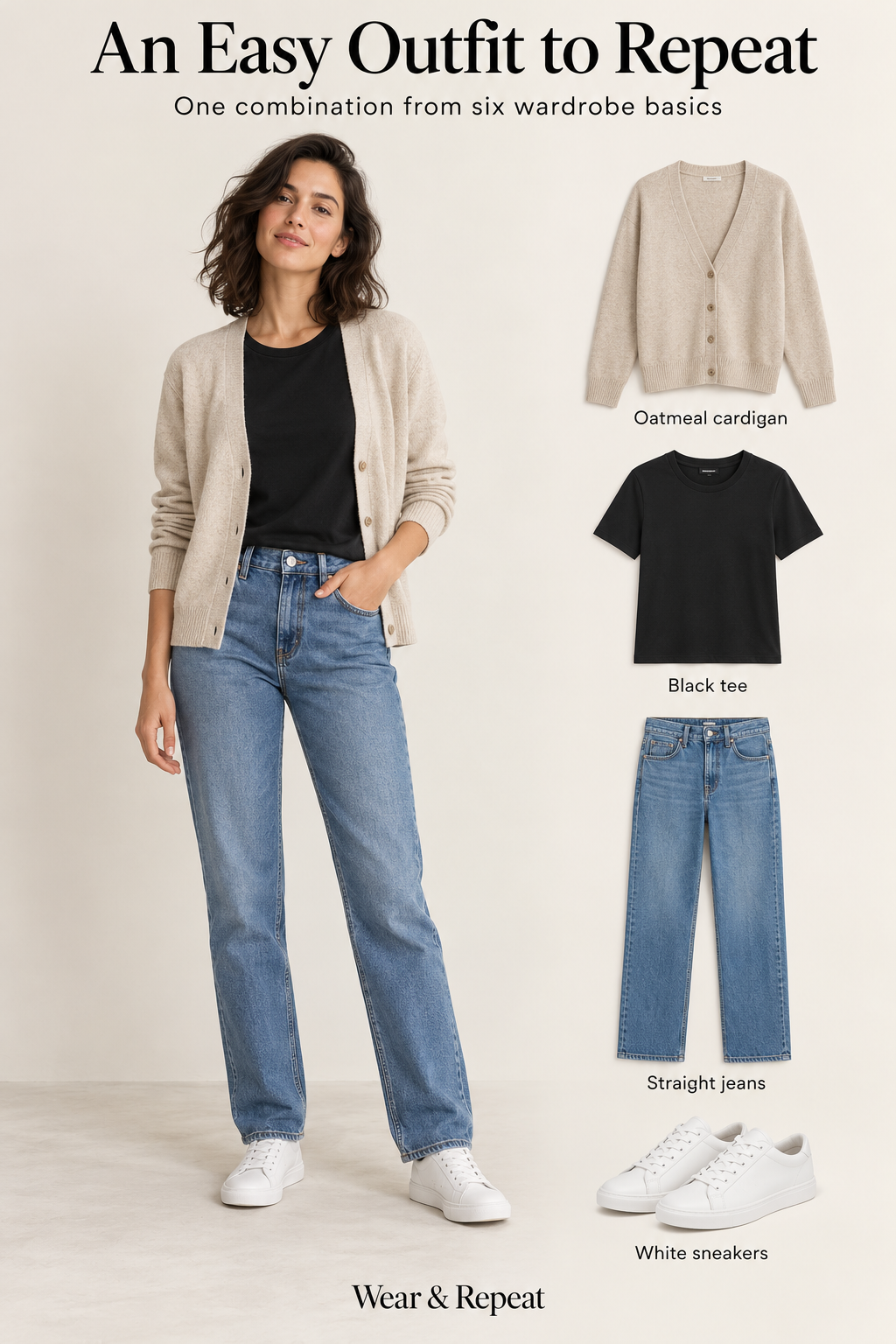
| Combination | Pieces | A useful adjustment |
|---|---|---|
| Shirt and denim | Ivory shirt, straight jeans, white sneakers | Try the shirt untucked, then a partial tuck |
| Tee and trousers | Black tee, tailored trousers, white sneakers | Check the hem position against the waistband |
| Soft layered denim | Black tee, oatmeal cardigan, straight jeans, white sneakers | Leave the cardigan open to show the base layer |
| Shirt over tee | Black tee, open ivory shirt, tailored trousers, white sneakers | Roll the sleeves only if they stay comfortable |
Review the week before adding more
Wear the combinations during ordinary days and note practical gaps. You may need a weatherproof outer layer, different footwear for work, or another washable top between laundry days. Those are useful reasons to expand. A second near-identical cardigan is less urgent if the first already does the job.
Before buying a missing piece, write down the role it fills, two outfits it joins and your total budget including alterations or delivery. Check the seller's size chart against your measurements and read the return policy. This turns the capsule into a small working system: repeat the outfits you enjoy, change what feels awkward, and add only the pieces that earn a place in your routine.